Insulated Blinds for Winter in Belleville: The 2026 Energy-Saving Guide

Did you know that windows and doors can account for up to 35% of your home's total heat loss during a cold Ontario winter? For homeowners in Belleville, those biting winds off Lake Ontario often turn a cozy evening into a drafty struggle by the time January arrives. If you have noticed your furnace working overtime while you still feel a chill near the glass, you aren't alone. Selecting the right insulated blinds for winter Belleville weather is about more than just aesthetics; it is about creating a precision-fit thermal barrier that keeps the warmth inside where it belongs.
We understand the frustration of rising utility bills and the confusion of navigating different insulating materials. This guide will show you how custom window treatments can slash your heating costs and eliminate those stubborn drafts for good. You will discover the most effective energy-saving styles for 2026, from honeycomb shades to professional installation secrets that ensure a perfect, airtight fit for every room in your home.
Key Takeaways
- Identify how the "chimney effect" and thermal bypass pull cold air into your living space through poorly fitted window treatments.
- Compare the thermal resistance (R-values) of Honeycomb, Faux Wood, and Roller shades to choose the best insulation for your specific needs.
- Learn why a precision custom fit is the only way to effectively seal gaps and maximize the performance of insulated blinds for winter Belleville weather.
- Master directional strategies to capture natural solar warmth on South-facing windows while reinforcing North-facing glass against the Quinte cold.
- Benefit from locally manufactured solutions that provide faster turnaround times and are specifically designed for the Eastern Ontario climate.
The Winter Challenge: Why Belleville Homes Lose Heat
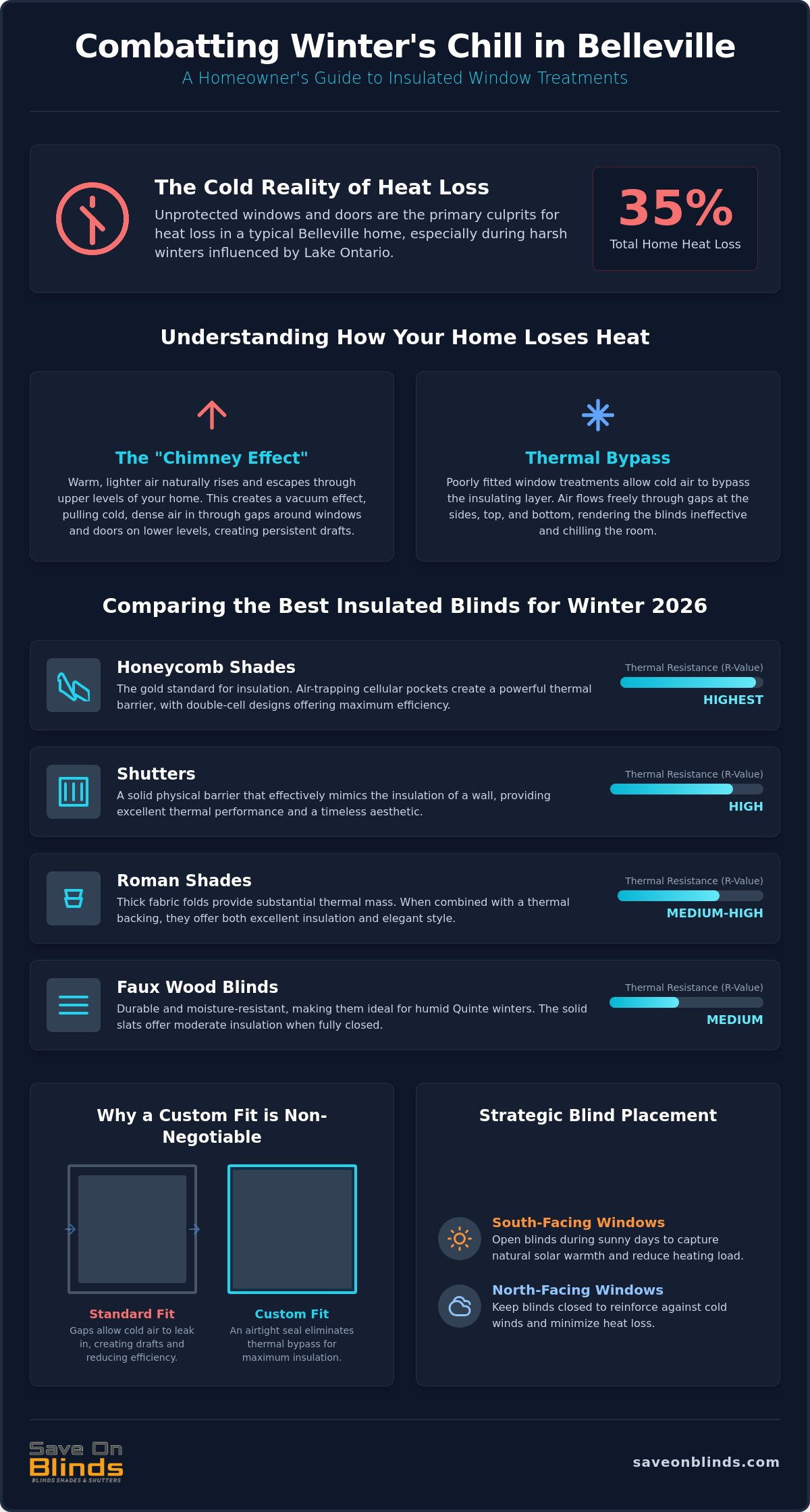
Belleville winters are notoriously unforgiving, especially when the wind picks up across the Bay of Quinte. According to Natural Resources Canada, windows and doors can account for 25% to 35% of a home's total heat loss. This isn't just a minor efficiency leak; it is a significant drain on your monthly budget. Many homeowners struggle with the "chimney effect," where warm air rises and escapes through the upper levels of the house. This escape creates a vacuum that pulls freezing air inside through tiny gaps in your window seals and frames. Installing insulated blinds for winter Belleville weather provides the necessary defense to stop this cycle and stabilize your indoor climate.
Think of your windows as the weakest point in your home’s thermal envelope. Without a proper covering, the heat you pay for is constantly migrating toward the cold glass. Using a high-quality window treatment acts as a dedicated thermal barrier. A thermal barrier is a specialized layer designed to disrupt the transfer of heat between your indoor living space and the outdoor environment. By sealing off the window opening, you effectively trap a layer of air that prevents the furnace from working harder than necessary.
Beyond interior treatments, ensuring your home's exterior components are up to par is equally important; industry leaders like Long Island Windows and Siding demonstrate how high-quality window and siding installations work in tandem with blinds to maximize energy efficiency.
The Role of Windows in Your Energy Bills
Glass is a natural thermal bridge, meaning it conducts heat far more efficiently than your insulated walls. Even modern double-pane windows allow a certain amount of radiant heat to pass through the glass. In older homes across the Quinte region, single-pane windows offer almost no resistance to the freezing temperatures outside. Adding an extra layer of insulation at the window doesn't just help older homes; it optimizes the performance of new, ENERGY STAR certified windows by providing an airtight seal. Understanding how insulated blinds work helps you see them as a functional home upgrade rather than a simple decor choice. This extra layer reduces the workload on your HVAC system, leading to a noticeably warmer home and lower utility costs.
Lake Ontario Winds and the Quinte Microclimate
Belleville’s geography creates a unique microclimate that can be particularly harsh on residential energy efficiency. If your home is located in East Hill or directly along the waterfront, the wind-chill factor is significantly higher than in inland areas. The damp air from Lake Ontario is heavy and carries more thermal energy away from your home than dry air would. This high humidity makes drafty rooms feel much colder, even if the thermostat is set to a high temperature. Custom-fitted treatments are essential here because they eliminate the side gaps where these damp winds often penetrate. BOOK A PERSONALIZED CONSULTATION to ensure your windows are prepared for the next cold snap.
While protecting your home's efficiency from the damp lake-effect cold is a priority, ensuring your transportation is equally prepared for these conditions is also vital. For those in the Greater Rochester area, Stone Road Auto specializes in high-quality pre-owned vehicles that are ready to handle the specific demands of a Lake Ontario winter.
Comparing the Best Insulated Blinds for Winter 2026
Selecting the right materials for insulated blinds for winter Belleville homes requires looking closely at the R-value, which measures a product's thermal resistance. The higher the R-value, the better the material prevents heat from escaping your living space. While a standard roller shade provides excellent privacy and light control, it offers minimal insulation compared to specialized cellular designs or solid barriers. In 2026, we are seeing a significant shift toward "Blackout Insulating" fabrics. These materials feature multi-layered thermal backings that do double duty by blocking 100% of light and significantly increasing the window's overall energy efficiency.
For homeowners looking to maximize their savings, layering window treatments is a highly effective strategy. Combining custom blinds with heavy drapery creates an additional "dead air space" that further isolates the cold glass from your room. This layered approach doesn't just lower your utility bills; it adds a sophisticated, high-end look to your decor that single treatments often lack. Consider these primary options for your winter upgrade:
- Honeycomb Shades: Highest R-value due to air-trapping cells.
- Shutters: Solid physical barrier that mimics the insulation of a wall.
- Roman Shades: Thick fabric folds that provide substantial thermal mass.
- Faux Wood Blinds: Durable and moisture-resistant, ideal for humid Quinte winters.
Honeycomb Shades: The Gold Standard of Insulation
Honeycomb shades are engineered specifically for energy efficiency. The secret lies in their hexagonal cross-section, which traps air in distinct pockets. This trapped air acts as a powerful insulator, much like the air space in a double-pane window. When you compare single-cell to double-cell options, the double-cell design provides a superior thermal break, making it the preferred choice for the sub-zero temperatures we often see in Eastern Ontario. To understand the full range of benefits these products offer, read our honeycomb shades pillar for a detailed breakdown of styles and energy ratings.
Shutters and Drapery: Heavyweight Winter Solutions
Shutters provide a robust, physical barrier against the cold. Because they are constructed from solid wood or high-density faux wood, they offer excellent resistance to heat conduction. When professionally installed, shutters fit tightly against the window frame, leaving almost no room for drafts to enter. If you prefer a softer look, custom drapery is an excellent alternative. Thick drapes act as a thermal blanket for your windows, especially when they are paired with other treatments. Even Zebra shades can be optimized for winter use; simply align the solid bands during the coldest parts of the day to maintain a consistent thermal seal. If you want to see these materials in person, BOOK A PERSONALIZED CONSULTATION to explore our latest winter-ready collections.
Why Custom Fit is Mandatory for Winter Performance
Choosing high-quality materials is only half the battle. Even the most advanced insulated blinds for winter Belleville homes will fail to perform if they aren't measured to the millimeter. When a blind is too small for the window opening, it creates what energy experts call a "Thermal Bypass." This occurs when warm air from your room circulates behind the blind, hits the cold glass, and drops back into the room as a chilly draft. Think of your window treatment as a seal for a container; if the lid doesn't fit perfectly, the contents will eventually escape. Precision is the difference between a decorative window covering and a functional energy-saving tool.
Maximize your home's efficiency by prioritizing an "Inside Mount" whenever possible. This configuration places the blind within the window frame, creating a tight pocket of air between the fabric and the glass. This trapped air acts as a natural buffer, preventing the rapid transfer of heat. If your window depth doesn't allow for an inside mount, a professional installer can suggest an "Outside Mount" with specific overlaps to ensure the sides are sealed against the wall. This meticulous attention to detail eliminates the side gaps where Lake Ontario winds often find their way indoors.
The Failure of Big-Box Store Blinds
Standardized, off-the-shelf blinds are designed for "average" windows, but Belleville is famous for its unique heritage architecture. In many of our local East Hill homes, window frames have shifted or warped over decades. A store-bought blind might fit at the top but leave a significant gap at the bottom. Industry research suggests that a mere 1/2 inch gap on the sides of a window treatment can reduce its insulating efficiency by up to 50%. Don't gamble with mass-produced plastics that become brittle in the cold. Instead, choose Kingston-made custom hardware that is engineered to withstand the specific temperature fluctuations of the Quinte region.
Professional Measurement: The Save On Blinds Process
Eliminate the stress of DIY errors by utilizing our professional measurement service. Our consultants don't just pull a tape measure; they evaluate the structural integrity of your frames and the specific needs of each room. During our visit, we analyze window exposure to determine which side of your house needs the most aggressive thermal protection. For instance, a North-facing bedroom requires a different seal than a South-facing living room. Follow our detailed methodology for custom blinds Kingston Ontario to see how we turn a simple consultation into a roadmap for a warmer home. BOOK A PERSONALIZED CONSULTATION today to secure a draft-free winter.
Directional Strategy: Choosing Blinds Based on Window Exposure
Thermal efficiency isn't a one-size-fits-all solution for your home. The way your house sits on its lot in Belleville determines which windows lose the most heat and which ones can actually help warm your rooms. Developing a directional strategy for your insulated blinds for winter Belleville project allows you to customize the R-value for each room based on its specific exposure. By matching the right product to the right window, you create a balanced indoor climate that doesn't force your thermostat to compensate for "cold spots" in certain areas of the house.
Modern builds in the Quinte region often feature large patio doors and floor-to-ceiling glass to maximize views of the Bay. While beautiful, these large expanses of glass are significant sources of heat transfer. For these areas, consider high-performance vertical blinds or oversized cellular shades that provide a continuous thermal seal without sacrificing your view during the day. Transitioning between different styles across your home ensures that every room remains functional and energy-efficient throughout the coldest months.
Managing North and East Facing Drafts
North-facing windows are the most challenging during an Ontario winter because they never receive direct sunlight. These windows are the primary source of persistent drafts and "cold spots" that make a room feel uninviting. Prioritize your highest R-value treatments for these openings. Double-cell honeycomb shades or heavy custom drapery with thermal linings are the best choices here. In bedrooms, where maintaining a consistent temperature is vital for sleep, these thick barriers prevent the "falling air" sensation that occurs when warm indoor air hits a freezing North-facing pane. Don't settle for thin fabrics on these walls; use substantial materials to reinforce your home's thermal envelope.
Leveraging the Sun: South and West Windows
South and West-facing windows offer a unique opportunity to harvest free energy from the sun. Strategically allowing sunlight to enter your home through South-facing windows can naturally increase indoor temperatures, which effectively reduces the total load on your furnace during the afternoon hours. This concept, known as "Solar Heat Gain," is a powerful tool for lowering utility bills. Use light-filtering shades that you can easily open during peak sun hours and close immediately at sunset to trap that harvested warmth inside. Motorized window coverings are particularly effective for this strategy, as you can schedule them to open and close automatically based on the sun's position. This proactive approach ensures you never miss an opportunity to save energy. To find the perfect balance for your home's orientation, BOOK A PERSONALIZED CONSULTATION with one of our local design experts.
The Save On Blinds Advantage: Locally Made for the Quinte Cold
Choosing the right window treatments involves more than just picking a style from a catalog. At Save On Blinds, we take pride in our regional identity as a manufacturer with a dedicated assembly area in Kingston. This proximity allows us to serve homeowners in Belleville, Brockville, and Quinte West with significantly reduced lead times compared to big-box retailers. Because we produce our own goods locally, we understand the specific challenges of the Eastern Ontario climate. We don't just sell window coverings; we provide engineered solutions designed to withstand the biting winds and high humidity that define our winters.
Our "Trusted Neighbor" approach means we are personally invested in the comfort of your home. Global brands often design products for moderate climates, but our insulated blinds for winter Belleville projects use materials specifically tested for our northern environment. When you work with a local manufacturer, you benefit from professional measurement and installation that ensures a draft-free fit. This meticulous attention to detail is what transforms a standard blind into a high-performance thermal barrier.
Direct-to-Consumer Savings and Quality
We believe that high-end insulation should be accessible to every homeowner. By manufacturing our own products, we eliminate the middleman and pass those direct savings on to you. This model allows us to use premium, Canadian-made materials that remain flexible and effective even when temperatures drop to -30°C. Our commitment to quality extends beyond the sale. Being close to Belleville means our local support team is always available for service or warranty needs. You can invest with confidence, knowing that your window treatments are backed by experts who live and work in your community.
- Local Manufacturing: Faster turnaround and superior quality control.
- Climate-Ready Materials: Fabrics and hardware built for extreme temperature shifts.
- Direct Pricing: Attainable luxury without retail markups.
- Expert Installation: Professional precision for a perfect, airtight seal.
Start Your Energy-Saving Journey Today
The right window treatments are an investment that pays for itself. By installing high-quality insulated blinds for winter Belleville, you can achieve up to a 20% reduction in your home's heat loss. This translates to lower monthly utility costs and a noticeably warmer living space for your family. Don't let another drafty winter drain your budget or compromise your comfort. Take the first step toward a more efficient home by scheduling a professional measurement with our team. BOOK A FREE CONSULTATION IN BELLEVILLE and let us help you create a custom solution that matches your decor and your energy-saving goals.
Take Control of Your Home's Winter Comfort Today
Achieving a warmer, more efficient home during a Quinte winter doesn't have to be a struggle. By choosing the right materials and implementing a directional strategy for your windows, you can save up to 20% on your seasonal heating bills. Remember that the secret to performance isn't just the fabric; it's the professional measurement that eliminates the thermal bypass and seals out those Lake Ontario drafts for good. Investing in insulated blinds for winter Belleville weather is a proactive step toward long-term comfort and attainable luxury.
Our team is ready to help you transform your living space with products manufactured right here in Kingston. You'll benefit from reduced lead times and a precision fit that only a local expert can provide. Let's work together to ensure your home remains a cozy sanctuary all season long. We look forward to helping you find the perfect balance of style and savings for your unique space.
GET A FREE IN-HOME CONSULTATION IN BELLEVILLE
Frequently Asked Questions
Do insulated blinds really work for winter?
Yes, insulated blinds for winter Belleville homes are highly effective at reducing heat loss. They function by creating a thermal barrier between the cold window glass and your heated living space. According to Natural Resources Canada, windows can account for up to 35% of a home's total heat loss. High-quality blinds trap a layer of still air that disrupts this transfer, keeping your rooms noticeably warmer without increasing your furnace load.
Which type of blind is best for stopping drafts?
Honeycomb shades, also known as cellular shades, are the most effective option for stopping drafts. Their unique hexagonal cells are designed specifically to trap air and create a powerful insulating pocket. For the best results, choose a double-cell design and ensure the treatment is installed as an inside mount. This configuration seals the edges of the window frame, preventing cold air from leaking into your room through the side gaps.
How much can I save on my heating bill with insulated window shades?
Homeowners can typically save up to 20% on their winter heating costs by installing custom-fitted insulated window treatments. The exact savings depend on your home's current insulation levels and the orientation of your windows. By reducing the frequency at which your HVAC system needs to cycle, these blinds pay for themselves over several seasons. They are a practical investment that provides both immediate comfort and long-term financial benefits.
What is the difference between cellular shades and honeycomb shades?
There is no difference between these two terms; they refer to the same type of window treatment. The names are used interchangeably by manufacturers to describe the pleated fabric shades that feature air-trapping "cells" when viewed from the side. These cells resemble a honeycomb, which is where the descriptive name originates. Both terms represent the gold standard for window insulation in the Eastern Ontario climate.
Are shutters better than blinds for winter insulation?
Shutters provide a different but equally effective type of insulation compared to blinds. While honeycomb blinds use air pockets, shutters act as a solid physical barrier similar to an extra wall. Because shutters are constructed from thick wood or high-density faux wood, they offer excellent thermal resistance. They are particularly effective in heritage homes where window frames may be slightly uneven, as the shutter frame provides a permanent, airtight seal.
Can I install insulated blinds myself, or do I need a professional?
Professional installation is highly recommended to ensure your insulated blinds for winter Belleville provide a 100% airtight seal. DIY installations often result in small gaps that lead to "thermal bypass," where cold air circulates behind the blind and renders the insulation ineffective. A professional installer possesses the tools and expertise to account for warped frames and ensure the hardware is perfectly aligned for maximum energy efficiency.
What is the best way to cover large sliding glass doors in the winter?
Vertical honeycomb shades or custom drapery are the best solutions for large sliding glass doors. These expansive glass surfaces are major sources of heat loss because of their size. Vertical cellular shades provide the same air-trapping benefits as standard honeycomb blinds but are engineered to slide horizontally for easy door access. Pairing these with custom drapery creates a layered defense that significantly improves the comfort of your kitchen or living area.
Are there any government rebates for energy-efficient blinds in Ontario for 2026?
The primary energy rebate program in Ontario for 2026 is the Home Renovation Savings Program (HRSP), which is funded through November 30, 2026. While the program currently focuses on providing a $100 rebate per opening for new ENERGY STAR certified windows and doors, high-performance window coverings are a vital part of a total home insulation strategy. We recommend checking the Save on Energy website for the latest updates on bundled path rebates that include thermal envelope improvements.